
Chandler Lawn Edging Services
Choose our expert lawn edging for a polished, professional look that enhances curb appeal, prevents grass overgrowth, and makes yard maintenance easier than ever.
Get a Free QuoteOur Chandler Landscaping & Yard Care Services
When to Schedule Lawn Edging in Chandler, Arizona – Seasonal Guide
In Chandler, Arizona, timing your lawn edging is crucial for maintaining crisp, healthy borders and maximizing curb appeal. The region’s desert climate, characterized by hot summers, mild winters, and monsoon rains, means that the best periods for lawn edging are typically in early spring (late February to April) and again in early fall (September to October). These windows avoid the extreme summer heat and allow your lawn to recover quickly, especially in neighborhoods like Ocotillo and Sun Groves, where lush lawns are a point of pride.
Local environmental factors play a significant role in determining the optimal schedule. Chandler’s soil tends to be alkaline and compact, which can affect root growth and edging precision. Areas near Veterans Oasis Park or along the Price Corridor may experience more shade and humidity, while neighborhoods closer to the Gila River Indian Community face higher drought risk. It’s also important to consider Chandler’s average last frost date in early February and municipal watering restrictions, which can impact both the timing and frequency of lawn maintenance. For more information on local regulations, visit the official city resource.
Local Factors to Consider for Lawn Edging in Chandler
- Tree density and shade coverage (e.g., mature trees in Circle G Ranches)
- Soil type and compaction, especially in newer developments
- Seasonal precipitation and monsoon patterns
- Drought risk and municipal watering restrictions
- Terrain and slope, particularly in custom home lots
- Proximity to landmarks or parks that influence microclimates
Benefits of Lawn Edging in Chandler
Enhanced Curb Appeal
Weed Growth Prevention
Defined Landscape Borders
Low Maintenance Solutions
Increased Property Value
Professional Installation Expertise
Chandler Lawn Edging Types

Metal Lawn Edging
-
Plastic Landscape Edging
-
Concrete Curb Edging
-
Brick Lawn Borders
-
Natural Stone Edging
-
Wooden Landscape Borders
-
Rubber Lawn Edging
Our Lawn Edging Process
Site Evaluation
Marking Edges
Cutting the Edge
Debris Removal
Final Inspection
Why Choose Chandler Landscape Services
-
Chandler Homeowners Trust Us
-
Expert Lawn Maintenance
-
Reliable Scheduling
-
Competitive Pricing
-
Professional Team
-
Satisfaction Guarantee
-
Personalized Service
Coordinating Lawn Edging Services with Chandler's Public Works and Infrastructure
Lawn edging in Chandler requires attention to the city's municipal infrastructure, particularly where turf borders meet public sidewalks, curb lines, and storm drainage inlets. The City of Chandler's Public Works and Utilities Department oversees street maintenance and stormwater conveyance systems, and residents should ensure that edging debris—soil clippings, grass fragments, and displaced sediment—does not accumulate in curb gutters or wash into storm drain inlets. Chandler operates under Arizona's Phase II Municipal Separate Storm Sewer System (MS4) program, meaning landscape debris that enters the stormwater system can contribute to water quality violations under the Clean Water Act.
Property managers and homeowners should follow these coordination steps when scheduling lawn edging:
- Sweep or vacuum all edging debris from sidewalks, curbs, and gutters immediately after service
- Avoid directing clippings or soil toward storm drain openings, retention basins, or drainage channels
- Confirm current green waste disposal procedures with the city before placing edging debris curbside
- Coordinate edging along public rights-of-way with municipal street maintenance schedules to avoid conflicts
Chandler Public Works and Utilities Department
Official Website: Chandler Public Works and Utilities Department
How Chandler's Low-Desert Heat and Alkaline Soils Affect Lawn Edging
Chandler sits within the Phoenix metro low-desert region, classified under USDA Plant Hardiness Zone 9b to 10a, where summer temperatures routinely exceed 110°F and soils trend strongly alkaline. These conditions directly influence lawn edging frequency, technique, and timing. Bermudagrass—the dominant warm-season turf in Chandler—grows aggressively during the hot months, pushing stolons rapidly across hardscape borders and into adjacent landscape rock, drip zones, and walkways. According to the University of Arizona Cooperative Extension, bermudagrass requires consistent edge management during its active growth period from late spring through early fall.
Key environmental factors affecting lawn edging in Chandler include:
- Alkaline, calcium-carbonate-rich soils: Caliche layers and calcareous fill common in Chandler subdivisions can dull mechanical edging blades faster than neutral soils
- Reflected heat from hardscape: Concrete sidewalks, block walls, and decorative pavers radiate heat that accelerates turf encroachment along borders
- Irrigation overspray: Turf edges adjacent to hardscape frequently receive excess moisture from pop-up sprinkler heads, promoting lateral stolon growth
- Monsoon runoff: Summer storms can wash loosened edging soil into retention basins and curb inlets if debris is not managed promptly
Navigating Chandler's Stormwater and Property Maintenance Compliance for Lawn Edging
Lawn edging itself does not typically require a permit in Chandler, but the activity intersects with several regulatory frameworks that property owners should understand. The city enforces property maintenance standards that include keeping turf borders clean and preventing vegetation from encroaching onto public sidewalks or obstructing drainage flow. Chandler's Environmental Management division coordinates local stormwater compliance under Arizona DEQ's Phase II MS4 program, which requires municipalities to control pollutant discharge from landscape maintenance activities.
Relevant compliance considerations include:
- Edging debris, soil, and grass clippings are classified as potential stormwater pollutants when they enter the municipal storm drain system
- Properties adjacent to washes, flood-control channels, or retention basins should take extra precautions to contain displaced material
- Commercial lawn care operators performing edging services should verify compliance with Arizona Department of Water Resources landscaping guidelines regarding irrigation efficiency at turf-hardscape transitions
- HOA-governed communities may impose additional edging frequency or appearance standards beyond city code
Chandler Management Services - Environmental Management
Official Website: Chandler Management Services - Environmental Management
Timing and Methods for Professional Lawn Edging in Chandler's Climate
Professional lawn edging in Chandler follows a seasonal rhythm dictated by bermudagrass growth patterns and the region's extreme heat. The Turfgrass Maintenance Guide for Low Elevation Arizona from the University of Arizona provides foundational guidance on turf management cycles that directly inform edging schedules. During peak bermudagrass growth from May through September, edging may be needed every one to two weeks to maintain clean borders. Properties overseeded with perennial ryegrass for winter color require edging attention from October through March as well, though at reduced frequency.
- Mechanical blade edging along concrete walks and curbs produces the cleanest vertical cut and is preferred for hardscape-adjacent borders
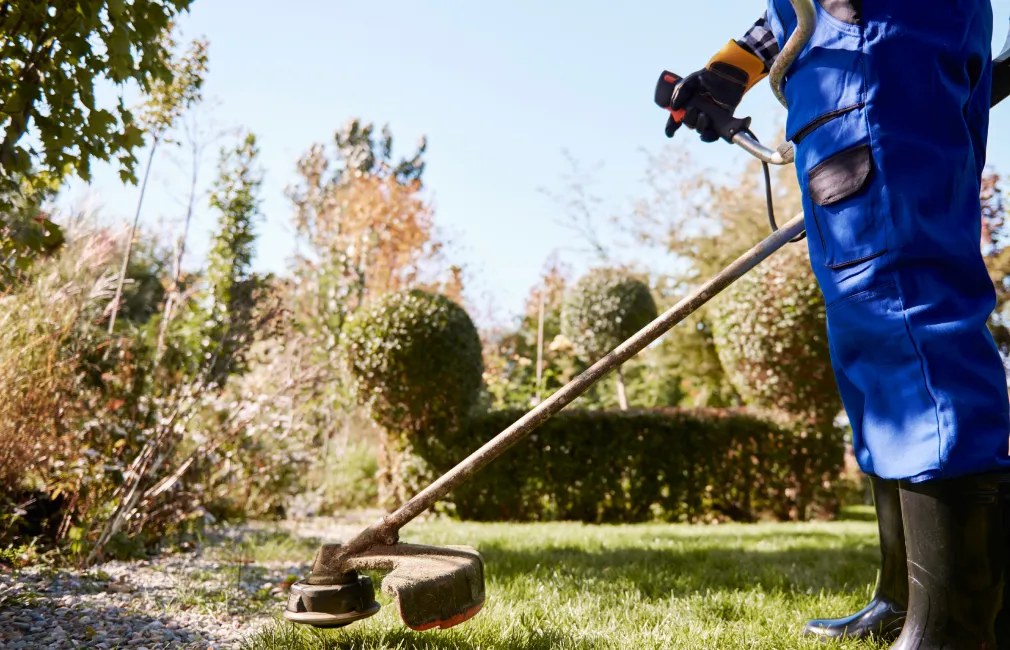
- String trimmer edging is commonly used along landscape rock borders, planting beds, and irregular curves but requires careful depth control to avoid scalping turf crowns
- Early morning service timing is strongly recommended during summer months to reduce heat exposure for crews and minimize turf stress from midday irrigation disruption
- Post-edging cleanup should include immediate removal of all clippings and soil from hardscape surfaces, with particular attention to curb gutters and any nearby storm drain inlets
- Edging depth typically ranges from one to two inches below the hardscape surface to create a defined channel that slows stolon re-encroachment
Chandler Community Services - Urban Forestry Program
Official Website: Chandler Community Services - Urban Forestry Program
What Neighborhoods Do We Serve Throughout Chandler, AZ?
- Sun Groves — This established community features mature bermudagrass lawns with extensive hardscape borders along sidewalks and driveways, requiring frequent edging during the warm season to manage aggressive stolon growth.
- Ocotillo — Large lots with expansive turf areas and decorative rock transitions create complex edging lines, and proximity to retention basins demands careful debris containment during monsoon months.
- Andersen Springs — Older irrigated lots in this neighborhood often have settled grade along walkway edges, requiring periodic re-establishment of clean edging channels.
- Cooper Commons — Compact lot sizes and close hardscape adjacency intensify reflected heat along turf borders, accelerating bermudagrass encroachment onto sidewalks and patios.
- Lagos Vistoso — HOA-maintained common areas and individual lot frontages both require consistent edging standards, with community guidelines often specifying appearance thresholds.
- Clemente Ranch — Properties near wash corridors and flood-control channels in this subdivision should prioritize post-edging cleanup to prevent sediment migration into drainage infrastructure.